
Corporate Video Production: A Complete Guide for Businesses
The term "corporate video" covers a lot of ground. It can be a brand story on your homepage, a series of customer testimonials, a recruitment campaign, an employee spotlight, an internal communications video, or content created specifically for LinkedIn and other digital platforms.
But creating a good corporate video isn't simply about making a business look professional. It's about figuring out what you actually need to communicate, who needs to hear it, and finding the people and stories that can communicate it best.
At VGM Visual Storytelling, we approach corporate video production through a combination of strategy, journalism, and cinematic filmmaking. We work with real employees, executives, customers, and communities to create videos that feel polished without losing the human side of the organization. Because "corporate" doesn't have to mean corporate-sounding.
What Is Corporate Video Production?
Corporate video production is the process of creating professional video content for a business or organization. Unlike a traditional commercial, which is typically created around a specific advertising message or campaign, corporate video can serve many different purposes.
A company might need video to introduce its brand, recruit employees, share customer experiences, communicate internally, explain a complicated service, document an initiative, or create content for its website and social media channels. Because those goals can be very different, there isn't one formula for a corporate video.
The right approach starts with understanding who you're trying to reach, what you need them to understand, and what type of story will communicate that most effectively. Those questions should come before cameras, scripts, or production schedules because they ultimately shape every creative decision that follows.
What Are the Different Types of Corporate Videos?
One of the first decisions in corporate video production is determining what type of video you actually need. A brand story video can introduce the people, purpose, values, and story behind an organization, while a testimonial videoallows customers or clients to speak about their experiences in their own words.
An employee or recruitment video can give prospective employees a better understanding of the culture, workplace, and people they may be joining. A company culture video can highlight the personalities, relationships, and values within an organization. Corporate video production can also include executive communications, training and educational videos, company overviews, event content, internal communications, and social media videos.
Sometimes one production includes several of these. That's why we don't begin by asking, "What video should we make?" We begin by asking what the organization needs the video to accomplish. Once we understand the goal, we can determine which format makes the most sense.
How Is Corporate Video Different From Commercial Video?
Corporate videos and commercials can overlap, but they generally serve different purposes. A commercial is usually designed around a focused promotional message and may be created specifically for television, digital advertising, social media advertising, or a larger marketing campaign.
Corporate video is broader. It can certainly be used for marketing, but it can also support recruitment, internal communications, sales, education, fundraising, training, company culture, and other organizational needs.
The storytelling approach can be different too. Commercials may rely more heavily on scripting, talent, tightly controlled scenes, or a specific creative concept, while corporate videos often feature the real people inside an organization. That's something we particularly enjoy. Employees don't need to become actors for a company to create a great video. They need an environment where they can comfortably be themselves.
What Makes a Good Corporate Video?
A professional-looking video isn't automatically a good corporate video. The cinematography can be beautiful, the lighting can be perfect, and the music can sound great, but if the audience doesn't understand what you're trying to communicate, none of those things solve the problem.
Strong corporate video production starts with clarity. What is the central idea? Who is the audience? Who are the right people to communicate the message? What should someone understand after watching? Once those questions are answered, the creative decisions become much easier.
The goal isn't to fit every service, company value, statistic, and talking point into one video. It's to decide what matters most and build the story around that idea. A focused story is often far more memorable than a video trying to say everything at once.
Why Pre-Production Matters for Corporate Video
By the time our cameras arrive at your office, much of the work has already happened. Pre-production is where we develop the story, identify interview participants, determine filming locations, think through the visuals, coordinate schedules, and plan the logistics of production. Depending on the project, we may also conduct location scouting and pre-interviews.
This preparation is especially important when filming inside an active business. Your employees still have jobs to do, customers may still be coming through the door, meetings are happening, phones are ringing, and operations don't stop simply because a production crew arrives.
Good planning allows us to work around that. We want production to feel organized and intentional without unnecessarily disrupting the people we're there to film. The more prepared everyone is before production begins, the more efficiently we can use our time on location.
How Do You Prepare Employees and Executives for Video Interviews?
This is one of the questions we hear most often. People worry about what they're going to say, forgetting something important, or simply being uncomfortable in front of a camera. Sometimes they arrive with a perfectly memorized paragraph that sounds nothing like the way they normally speak.
Our advice is usually simple: you don't need to memorize your answers.
Our background in journalism plays an important role in the way we conduct corporate video interviews. Instead of asking employees or executives to perform a script, we guide them through a conversation. We prepare questions, listen carefully, ask follow-ups, and give people enough time to settle into the interview.
Most of the people we film aren't professional actors, and we don't expect them to be. Our job is to create an environment where they feel comfortable enough to speak naturally and, at least for a little while, forget that there's a camera in the room.
Should Corporate Videos Be Scripted?
Sometimes. There are situations where a script makes sense. An executive announcement may need precise wording, a training video may require specific information, or a product explanation may need to communicate technical details accurately.
But not every corporate video benefits from scripting. For testimonial videos, brand stories, employee spotlights, and company culture videos, heavily scripted responses can sometimes remove the personality that made you want to feature that person in the first place.
That's why we choose the approach based on the project. Sometimes we write, sometimes we interview, and sometimes the best solution combines both. The format should serve the story, not the other way around.
What Happens During a Corporate Video Shoot?
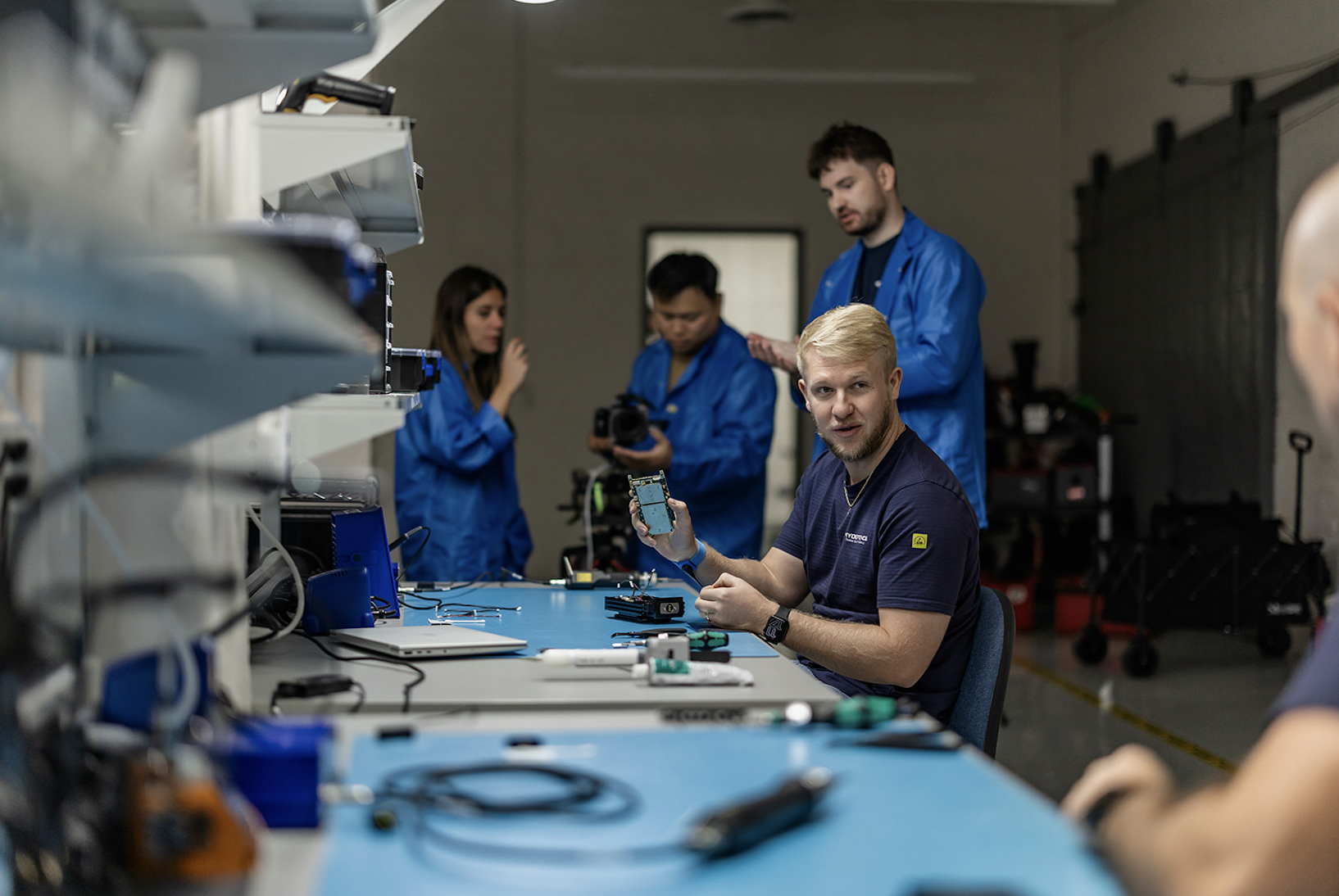
Every corporate video production is different, but filming days generally involve two primary types of footage: interviews and B-roll. Interviews give us the voices of the story, while B-roll gives us the world around those voices.
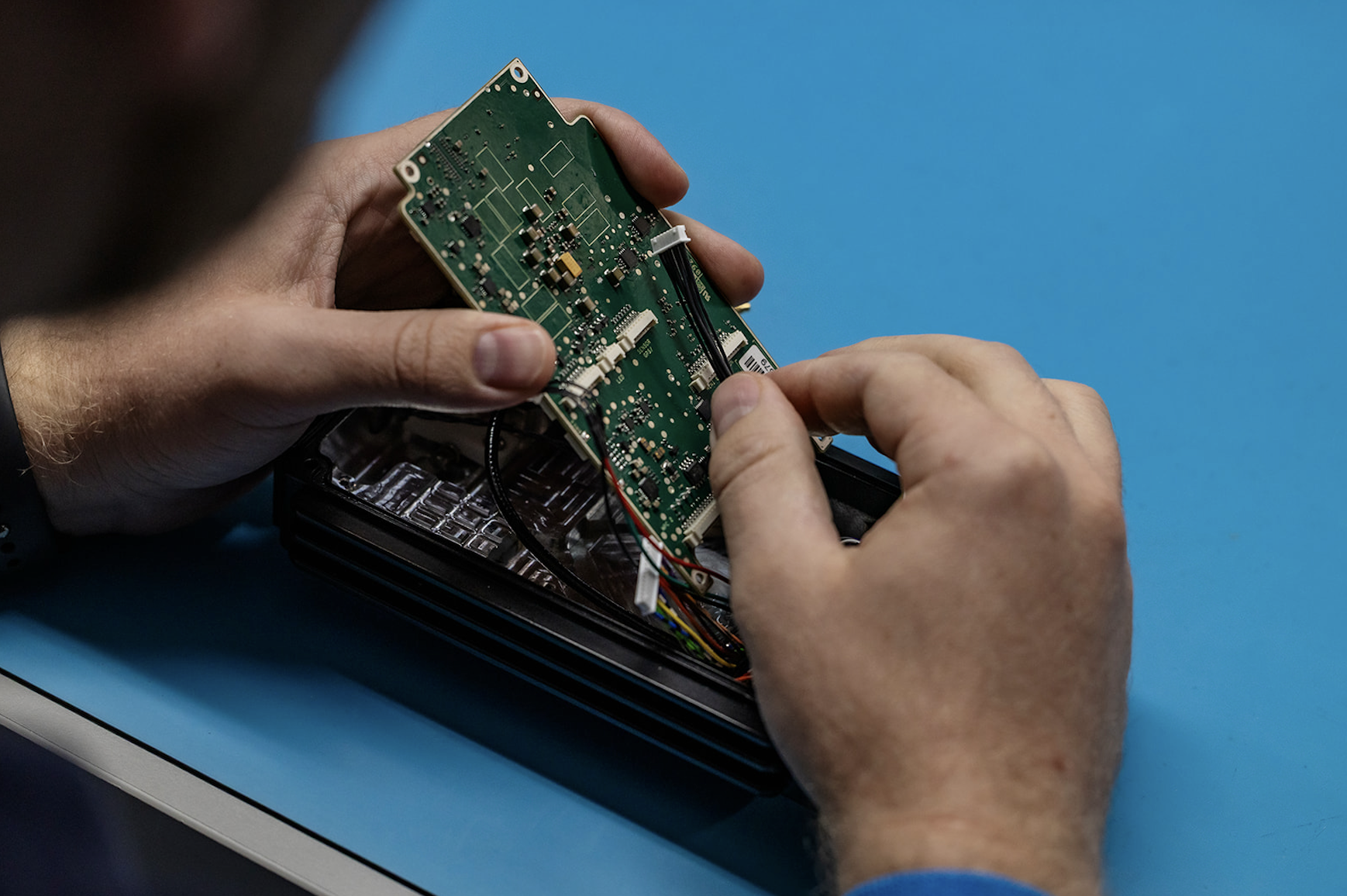
That might mean filming employees working together, manufacturing processes, interactions with customers, classrooms, offices, facilities, meetings, equipment, or the details that make a particular workplace distinctive. The goal is to capture visuals that support what people are saying and give the audience a genuine sense of the organization.
The production team may include a director, cinematographer, camera operators, lighting professionals, audio professionals, producers, and other crew members depending on the size and complexity of the project. We scale the crew around what the production actually requires. A one-person testimonial shouldn't automatically have the same production footprint as a multi-location corporate campaign.
Why Do Professional Lighting and Audio Matter?
Offices aren't designed to be film sets. Overhead lighting can be unflattering, conference rooms can echo, HVAC systems create noise, windows can create dramatic differences in exposure, and busy workplaces can introduce countless audio distractions.
Professional video production gives us the tools and experience to manage those challenges. Thoughtful lighting allows us to create a polished image while still making the environment feel like your organization. Professional microphones and audio equipment allow viewers to focus on what someone is saying rather than the room around them.
Good cinematography is also about much more than having a high-resolution camera. Lighting, lenses, composition, camera movement, backgrounds, and sound all influence how the audience experiences the people on screen. Ideally, viewers aren't thinking about any of those technical decisions. They're simply paying attention to the story.
What Is B-Roll and Why Does a Corporate Video Need It?
B-roll is the supporting footage used throughout a video while someone is speaking or while the story develops. But good corporate B-roll isn't just footage of people pretending to type on laptops. It should tell us something about the people, environment, process, or organization we're watching.
If someone describes the collaboration within their company, we want to see real interactions. If a manufacturer talks about craftsmanship, we want to see the process. If an employee describes the culture of an organization, we want to capture moments that allow the audience to experience that culture rather than simply hear someone talk about it.
That's why visual planning is part of pre-production. We don't want to arrive and ask, "What can we film?" We want to understand what we need to show so the visuals contribute meaningfully to the story.
What Happens During Corporate Video Post-Production?
Once filming is complete, the project moves into post-production. For interview-driven corporate videos, this is often where the story truly takes shape. We review the interviews, identify the strongest moments, and begin building a narrative from what people actually said.
From there, we incorporate B-roll, music, natural sound, graphics, lower thirds, and other visual elements that help bring the story together. Professional color grading creates consistency across the footage, while audio mixing ensures interviews, music, and natural sound complement rather than compete with one another.
Clients also have opportunities to provide feedback through defined revision rounds. Having a structured review process keeps post-production collaborative while ensuring the project maintains a clear creative direction.
How Long Does Corporate Video Production Take?
There isn't one timeline that applies to every corporate video. A straightforward testimonial and a multi-location corporate campaign have very different production requirements.
For many projects, the full process may take approximately four to eight weeks from initial planning through final delivery. The timeline depends on the number of interviews, filming days, locations, deliverables, schedules, and complexity of post-production.
The important thing is allowing enough time for pre-production. A well-planned filming day can save a tremendous amount of time later and helps keep the entire production moving efficiently.
How Much Does Corporate Video Production Cost?
Corporate video production costs depend on the scope of the project. A single interview filmed at one location will naturally require different resources than a multi-video campaign involving several locations, filming days, and deliverables.
Factors that can affect corporate video production cost include pre-production, number of filming days, crew size, locations, travel, specialized equipment, editing, music, sound design, color grading, motion graphics, animation, and the number of final videos.
At VGM, we build proposals around what the project actually requires rather than placing every corporate production into the same predetermined package. The scope should be clear before production begins, including what you're receiving, how many revision rounds are part of the project, and whether items such as additional filming, travel, or raw footage are included. Transparency matters. You should know what you're paying for before the cameras arrive.
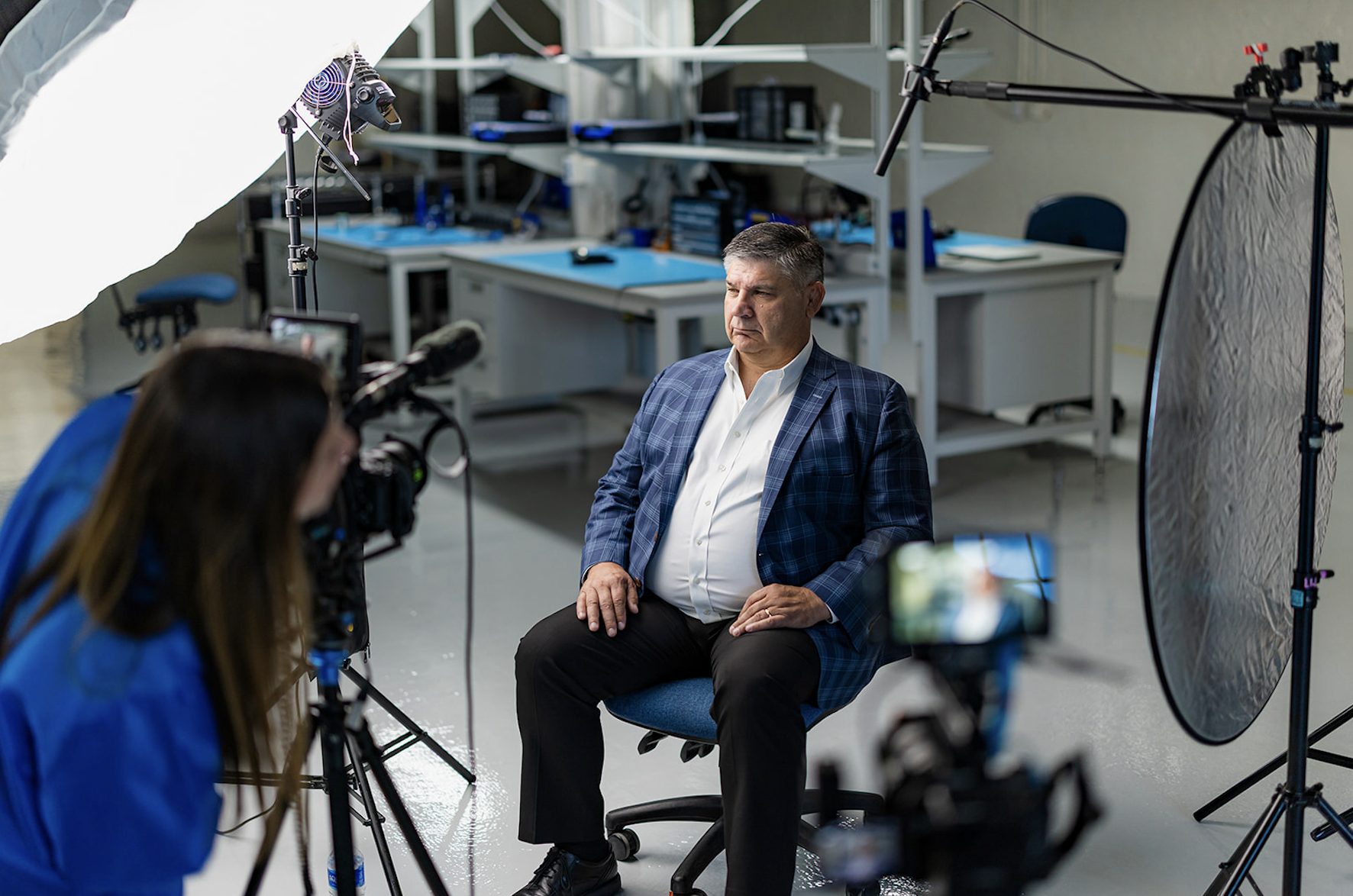
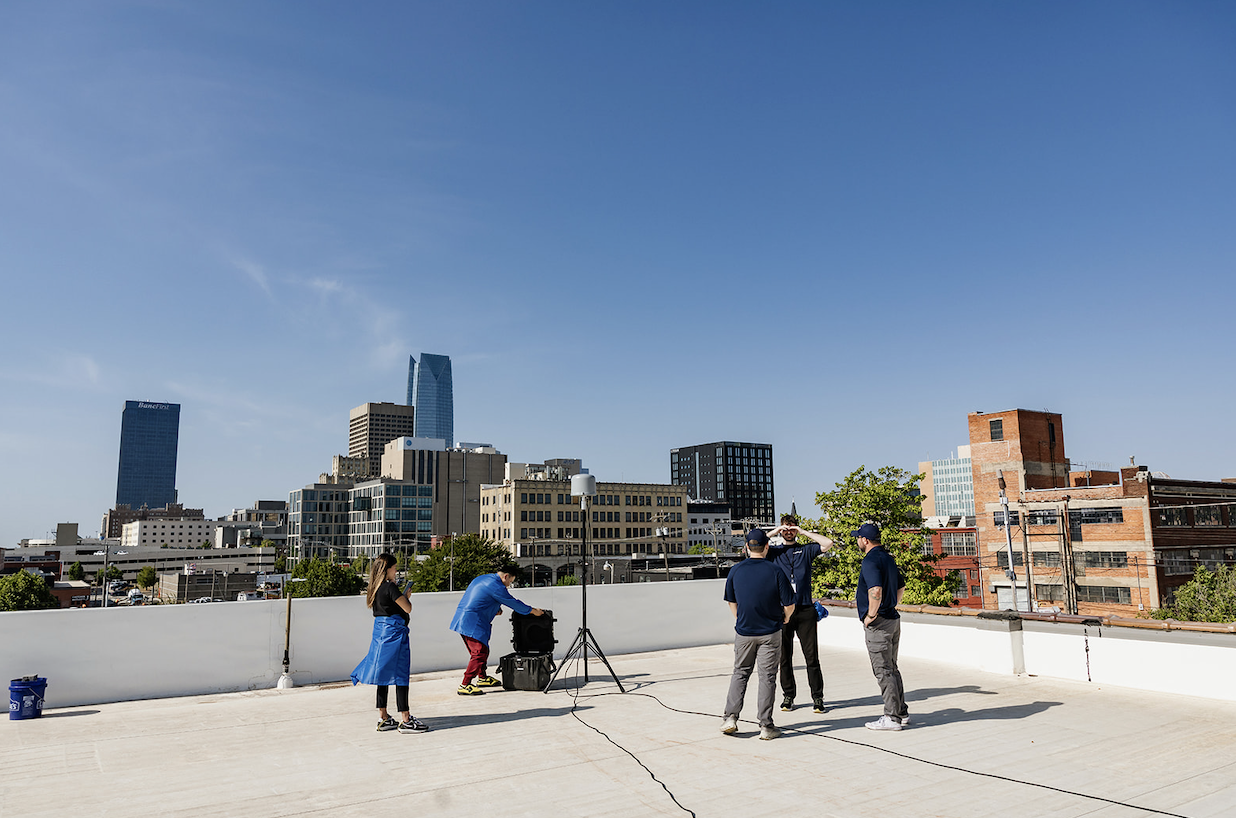
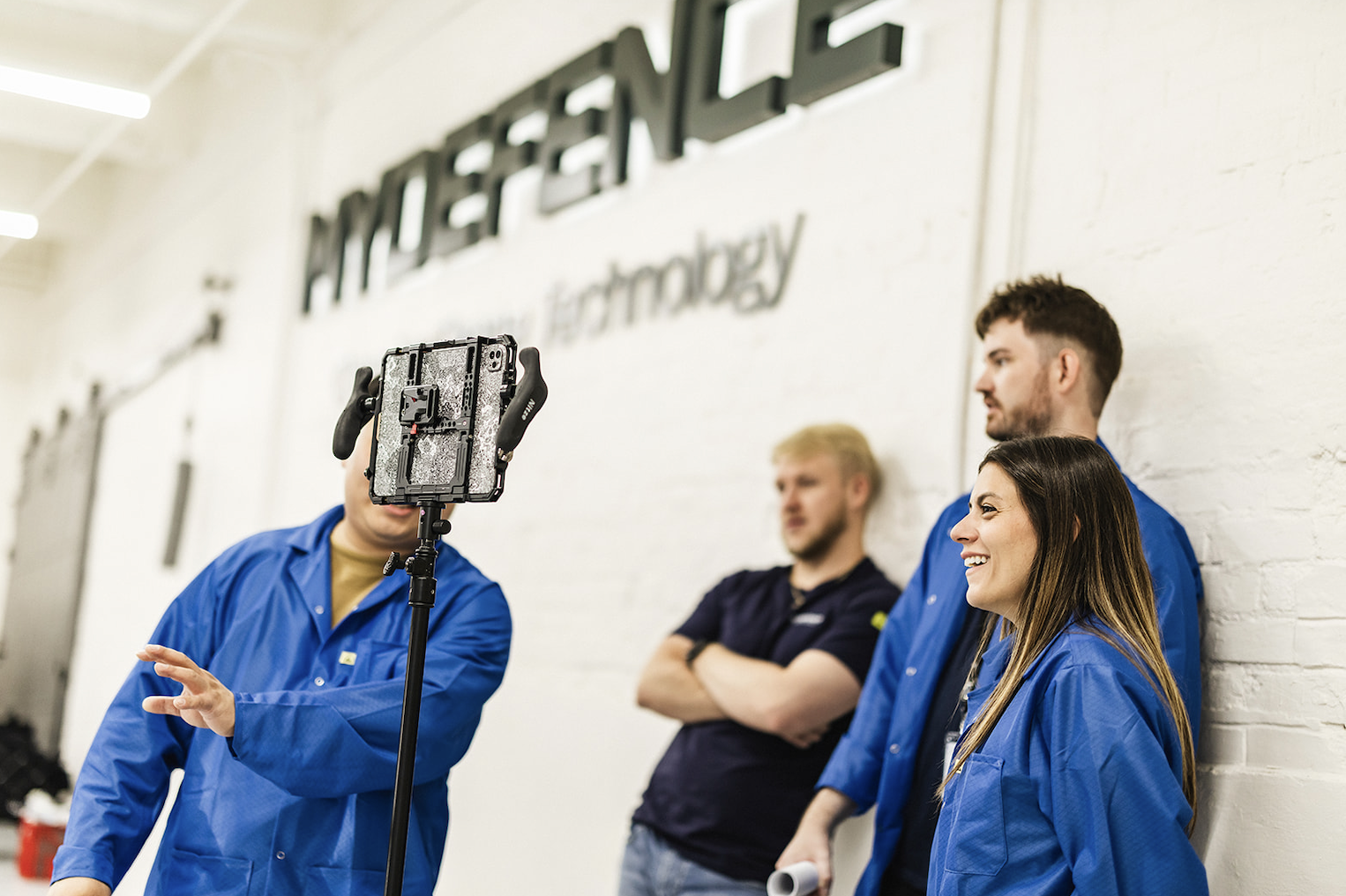
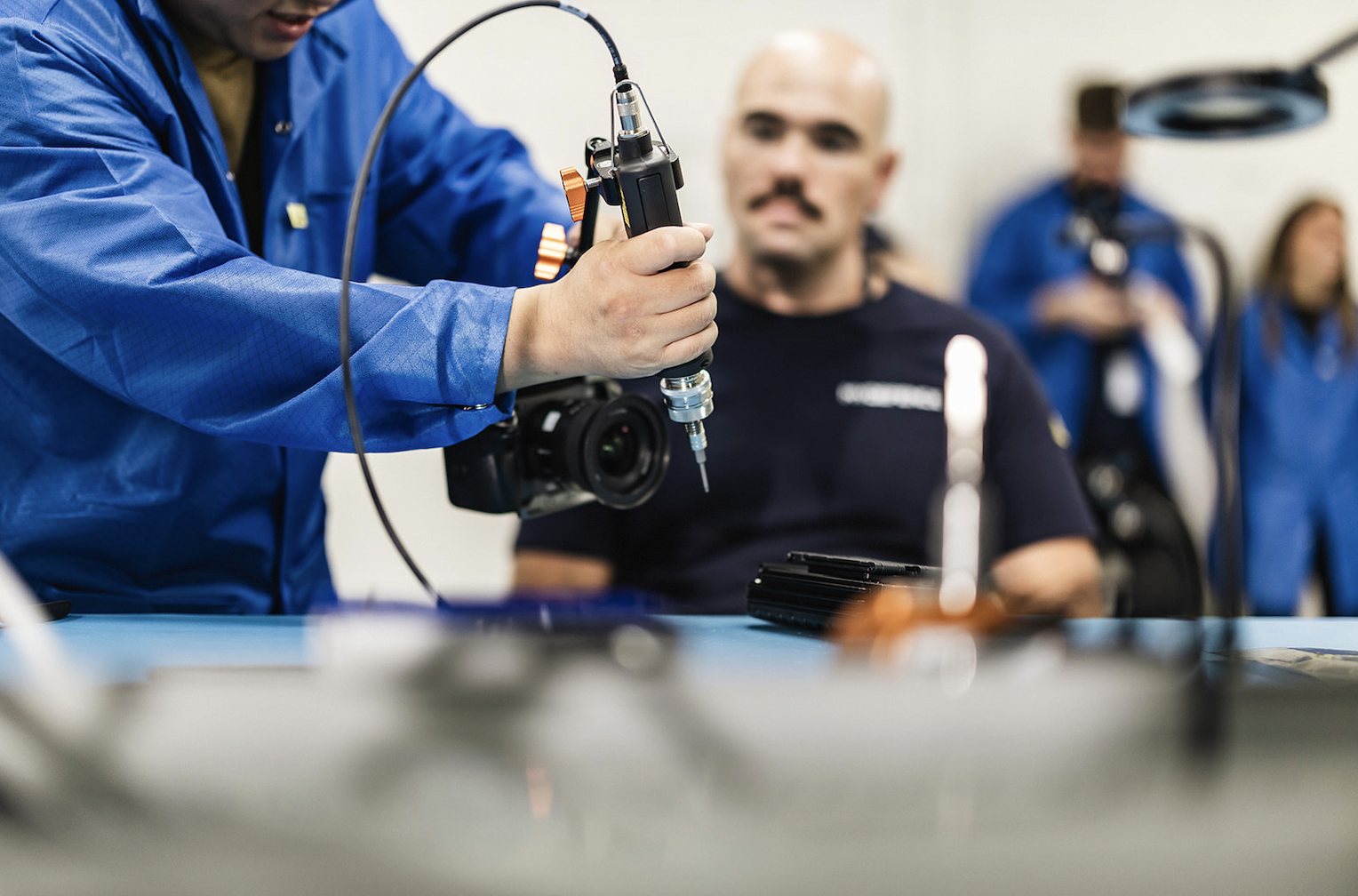
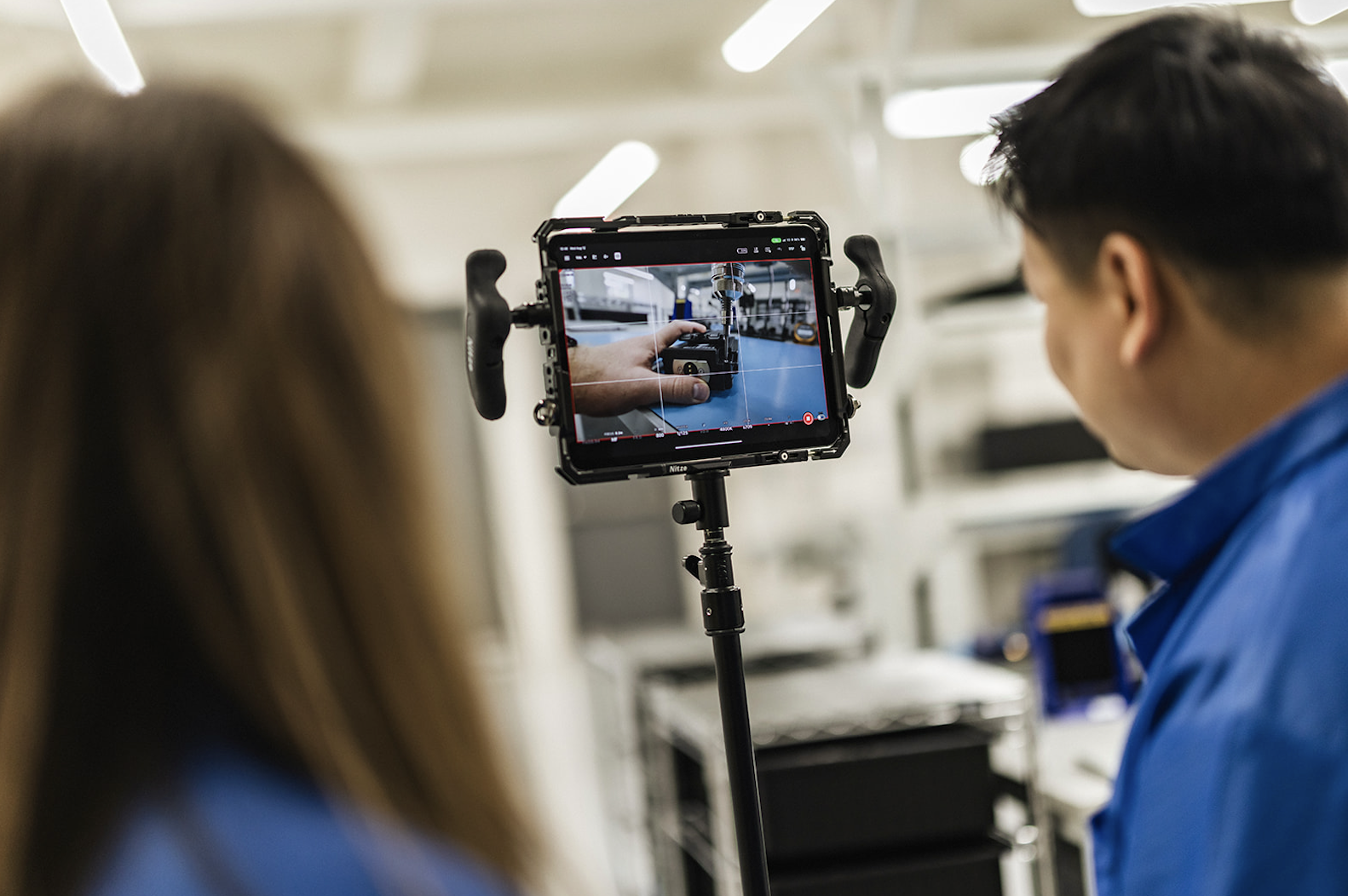
Behind The Scenes of a Corporate Video Project
Can One Corporate Video Production Create Multiple Pieces of Content?
Absolutely, and this is something we encourage organizations to think about before production. If we're already interviewing your CEO, employees, customers, or other important voices, there may be opportunities to create more than one useful piece of content from the same production.
A larger production might result in a primary brand story along with customer testimonials, employee spotlights, recruitment videos, social media content, or shorter videos built around specific topics. We can also plan for different formats. A video created primarily for a website or YouTube may be delivered in traditional 16:9 widescreen, while additional footage or edits can be planned for vertical platforms such as Instagram Reels.
Thinking about those needs before filming gives us the opportunity to capture the right material. It's much easier to plan for five deliverables while everyone is together than to realize three months later that we should have captured something else.
What Should You Look for in a Corporate Video Production Company?
Start with the work, but don't only look at the prettiest shots. Listen to the interviews. Do people sound comfortable and natural? Does each organization's story feel different, or does every video seem to follow the same template? Pay attention to lighting, audio, cinematography, editing, and storytelling as a whole.
Then look at the process. Who will actually be directing your production? How does the company prepare interview participants? How are filming days organized? What does the feedback process look like? What exactly will you receive when the project is finished?
A professional corporate video production company should be able to answer those questions clearly. You're not simply hiring someone with a camera. You're trusting a team to represent your organization and the people behind it.
Which Industries Can Benefit From Corporate Video Production?
Corporate video isn't limited to large corporations. We work with organizations across education, healthcare, energy, professional services, insurance, nonprofits, manufacturing, and other industries where people and expertise are an important part of the story.
Different industries simply need different approaches. A healthcare video may need to create a sense of comfort and trust, while a manufacturing video may need to communicate scale, expertise, and process. A recruitment video needs to help prospective employees understand the people and culture behind an organization, while a nonprofit may need to explain an issue and show the people affected by its work.
The industry changes. The need for clear, human communication doesn't.
Corporate Video Production in Oklahoma City and Beyond
VGM Visual Storytelling is an Oklahoma City video production company specializing in corporate video production, brand story videos, testimonial videos, recruitment and employee videos, commercial production, and documentary filmmaking.
Our approach combines journalism-driven interviews, strategic storytelling, and cinematic production to create videos centered around real people and genuine experiences. We're based in Oklahoma City and work with businesses and organizations throughout Oklahoma and across the country.
If you're considering corporate video production but aren't sure exactly what kind of video you need, you don't have to figure that out before reaching out. Start with what you're trying to communicate, and we'll help you determine the best way to tell it.
Set your story in motion.